
Barbershop Politics
Lovers of wisdom on the East End, let’s consider politics. The root of the word is the ancient Greek polis, the classical city-state, which appears to have been, albeit only for free men, the ideal solution to the problem of how to reconcile individual freedom with state authority. Citizens of ancient Athens were the state, themselves taking turns ruling, legislating, litigating, and protecting. This unprecedented joining of the personal with the collective was what inspired the founders of our own 250-year-old democratic endeavor.
Yet even the citizen/statesmen of Athens struggled mightily over the goal of democracy. In fact, the history of their repeated constitutional crises reveals that they, like us, were conflicted about two contrary meanings of “liberty and justice for all.” On one hand, the phrase can mean “No one is allowed to take what rightfully belongs to me.” In that reading, liberty means non-interference, justice is legitimate possession, and “for all” is everyone’s right to keep what they have. This describes the temperament of political conservatism. On the other hand, “liberty and justice for all” can mean “Everyone has the right to equal opportunities.” Liberty here is unhampered striving, justice is a level playing field, and “for all” means that the freedom to succeed must not depend on the wealth and status into which you are born. This, of course, is the temperament of political liberalism.
The heated futility of political disagreements indicates that one’s sympathy with the right or left is rarely based on reasoning. It is largely a matter of disposition. A liberal or conservative usually has as much chance of changing the other’s mind as I have of convincing a person to enjoy the taste of fermentation that they find unpleasant. In truth, entitlement and fairness are meant to check and complete each other, and, when they do, it is as much as a political system can hope for. Without fairness, entitlement becomes domination (oligarchy, military dictatorship); without entitlement, fairness becomes leveling (the elimination of anyone with elite skills). The Athenians learned the hard way about unchecked entitlement in 404 B.C. when the Thirty Tyrants purged the city of democrats and confiscated their property. The opposite happened two years later after democracy was restored, when, having failed to rescue some of their own drowning men after the naval victory at Arginusae, all of the remaining Athenian Generals were summarily executed without due process.
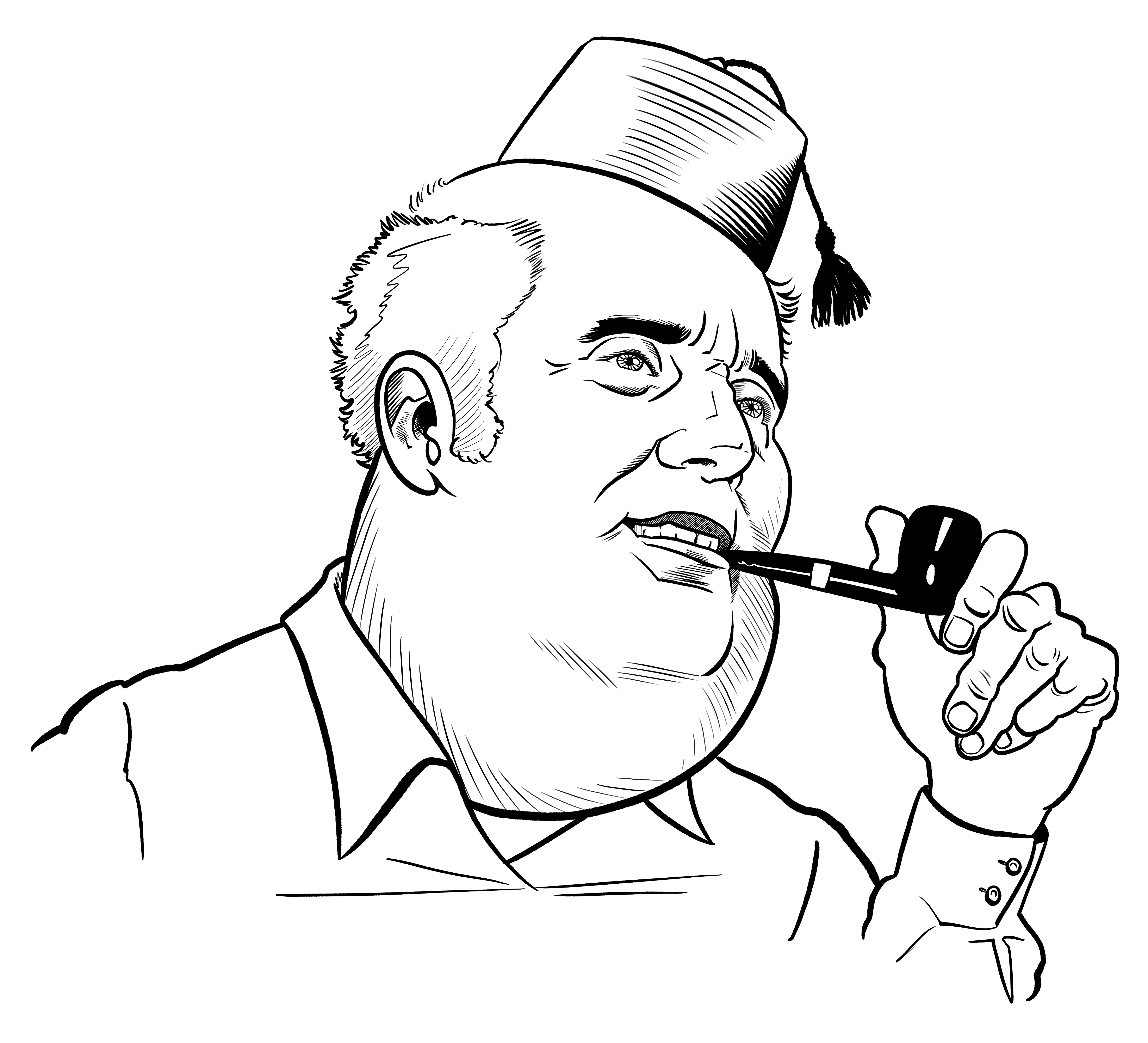
On the best days during the golden age of Athenian democracy, some citizens discussed politics philosophically in the public space of the Agora. This is not to say they spoke in lofty, abstract terms, but rather that they talked about it for its own sake, and without getting personal. I imagine the Agora to have been no different than what it’s like to occupy a barber’s chair at Vinnie and Nick’s Barber Shop. In fact, their shop in Amagansett Square is filled with the same citizen/statesmen types (volunteer firefighters, judges, cops, local politicians) that show up in fifth-century B.C.E. renditions of barbering in the Agora.
Much good ribbing takes place at Vinnie and Nick’s between those who have patiently earned the right over the years to participate in the conversation. It has been my privilege to take my turn in Vinnie’s chair through many elections that have gone both ways, and I’ve enjoyed and benefitted from genuinely philosophical discussions about politics. Right-leaners and left-leaners were bemused by, and curious about, what it might be like to feel so differently about the definition of justice. Such conversations, essential for democracy, have undoubtedly always relied on figures like Vinnie and Nick, who both possess the rare gift that allows them to succeed as intermediaries between political temperaments that are fundamentally contrary.