
Edible Coast
This past fall, I waded the shores of the Celtic Sea with those of the East End never far from my thoughts. At the Ballymaloe Cookery School, located on a 100-acre organic farm in County Cork, I found myself surrounded by a host of new delicacies: lemony wood sorrel, beetroots the size of my head, bright-red myrtle berries that tasted of pine and winter, butter so yellow it was hard to believe it was real, bright-pink flowers called pineapple sage (that had an uncanny taste of . . . pineapple), and eggs in varying shades of brown and light blue from the chickens who called the farm’s winding dirt paths home.
But beyond the treasures of the farm, I found something even more inspiring to learn from, surprisingly relevant to my life on the East Coast: the forageable bounty of the Irish coastline.
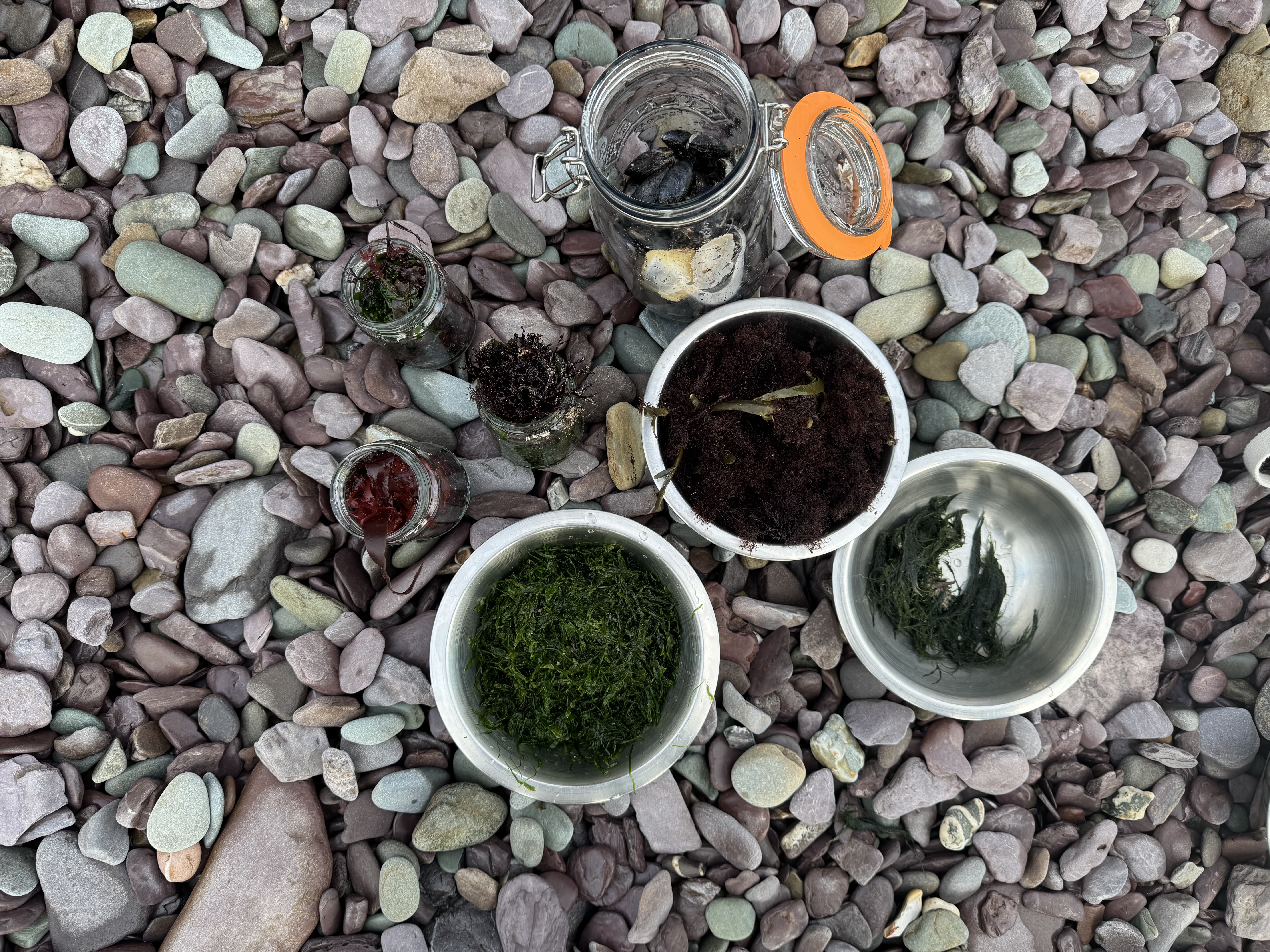
Along the rocks, right before the vast expanses of sand, I found sea spinach, a wild coastal plant whose large leaves look like a hybrid between spinach and chard and taste like the salty tang of the sea below. Closer to the shore, rock samphire sprouted in bunches between dirt and rocks, its tiny leaves offering an intensely briny flavor. At the shore’s very edge, where rocks met sea, it was the bright and hairy strands of some unnnamed algae coating entire rocks that drew me in. And then, walking along the sandy shore when the tide was low, or climbing amongst the tidepools of a hidden rocky beach, I discovered it — the plant that would send my mind abuzz with culinary inspiration: seaweed.
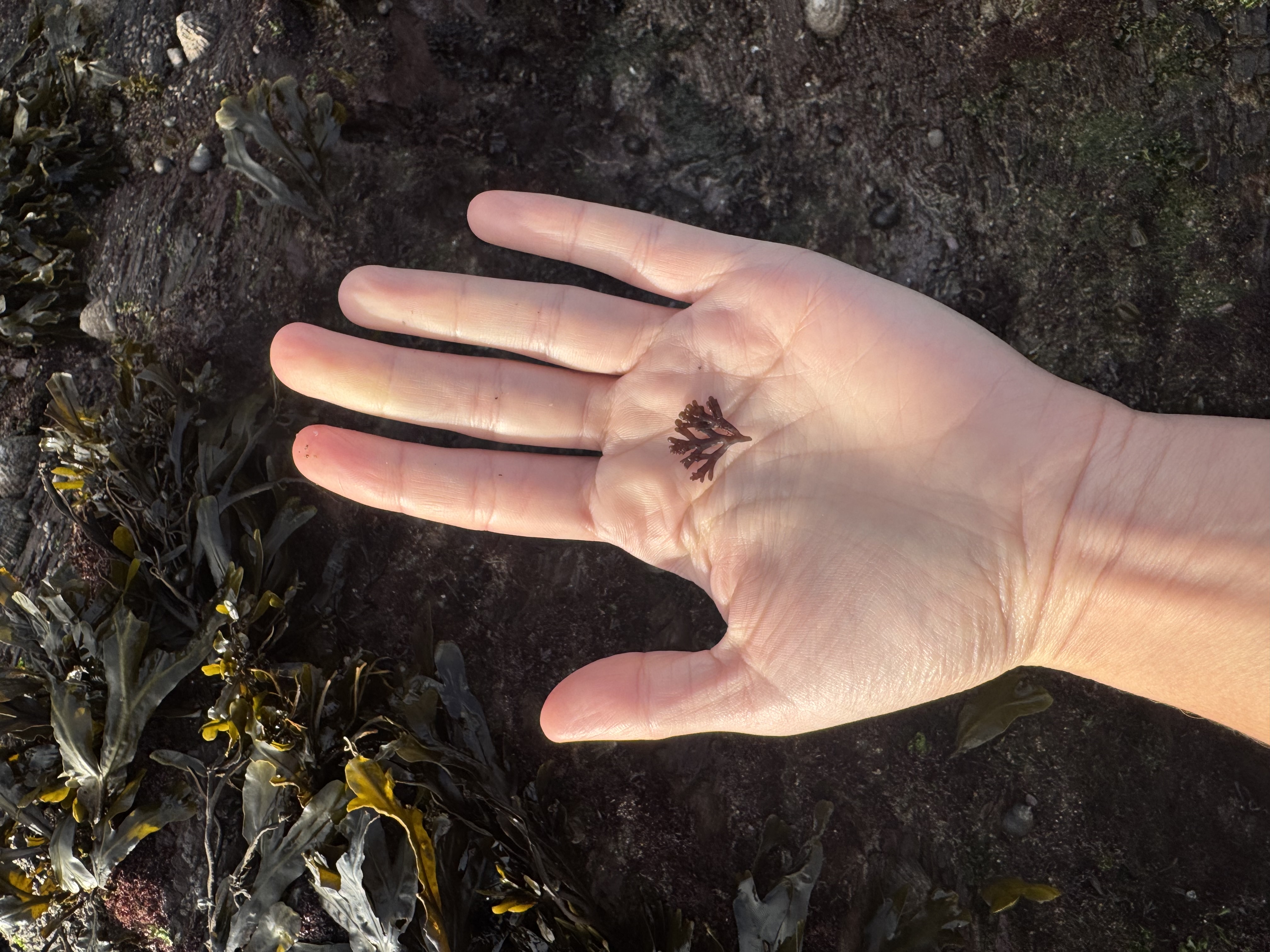
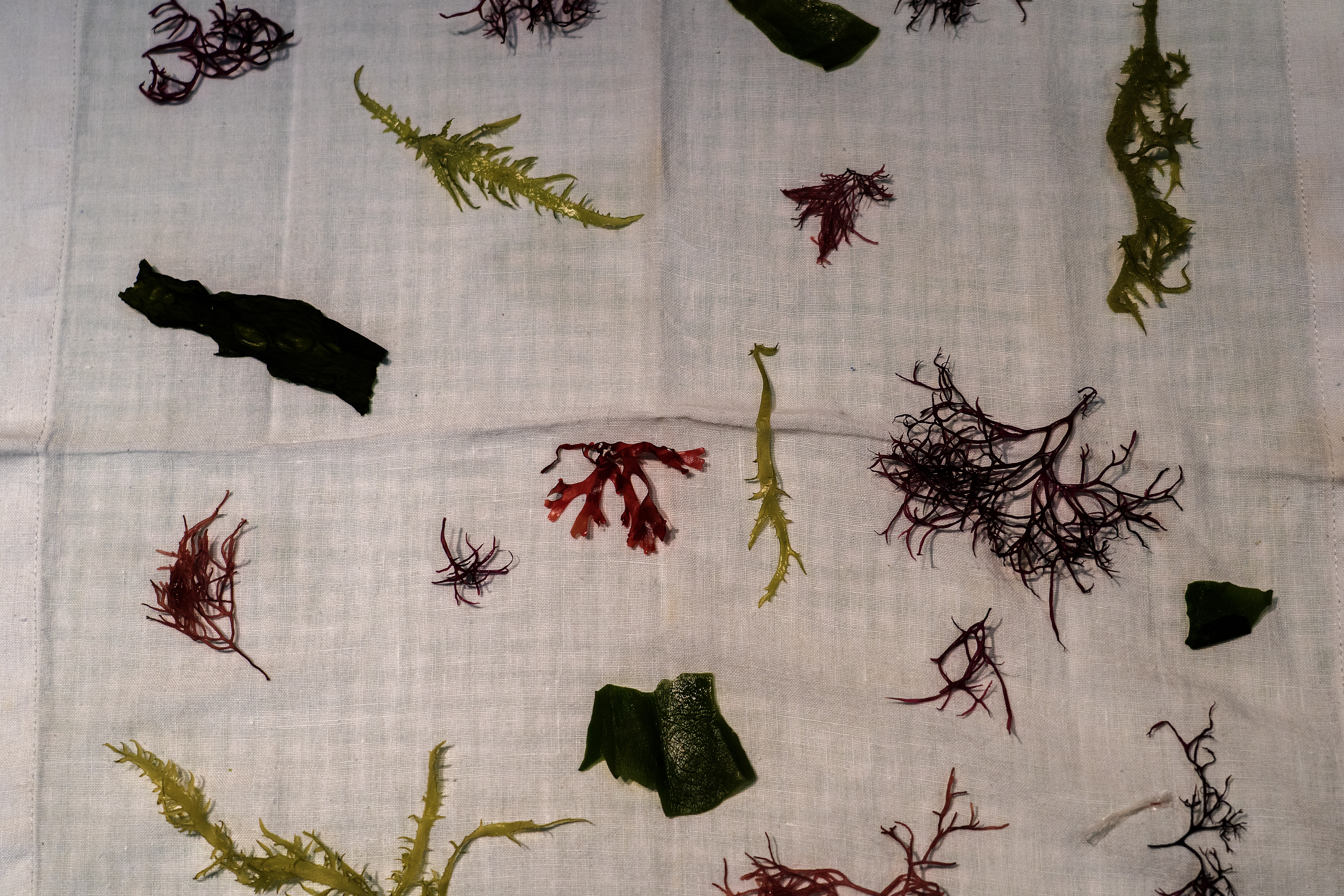
I came across such a diversity of seaweeds that it was hard to imagine they all dwelled mere inches below the water: kelp, serrated wrack, small clumps of pepper dulse with their pungent truffle flavor, and carrageen moss, which is traditionally used as a gelling agent in a delicately buoyant carrageen moss pudding.
As I started to gather seaweed for culinary and artistic explorations, I also began to understand its importance to the entire oceanic food chain and the climate. Not only is seaweed a delicious superfood — full of essential vitamins, minerals, and fiber — it is also a climate powerhouse, generating massive quantities of oxygen, reducing water pollution via natural filtration, and sequestering immense amounts of carbon through photosynthesis.
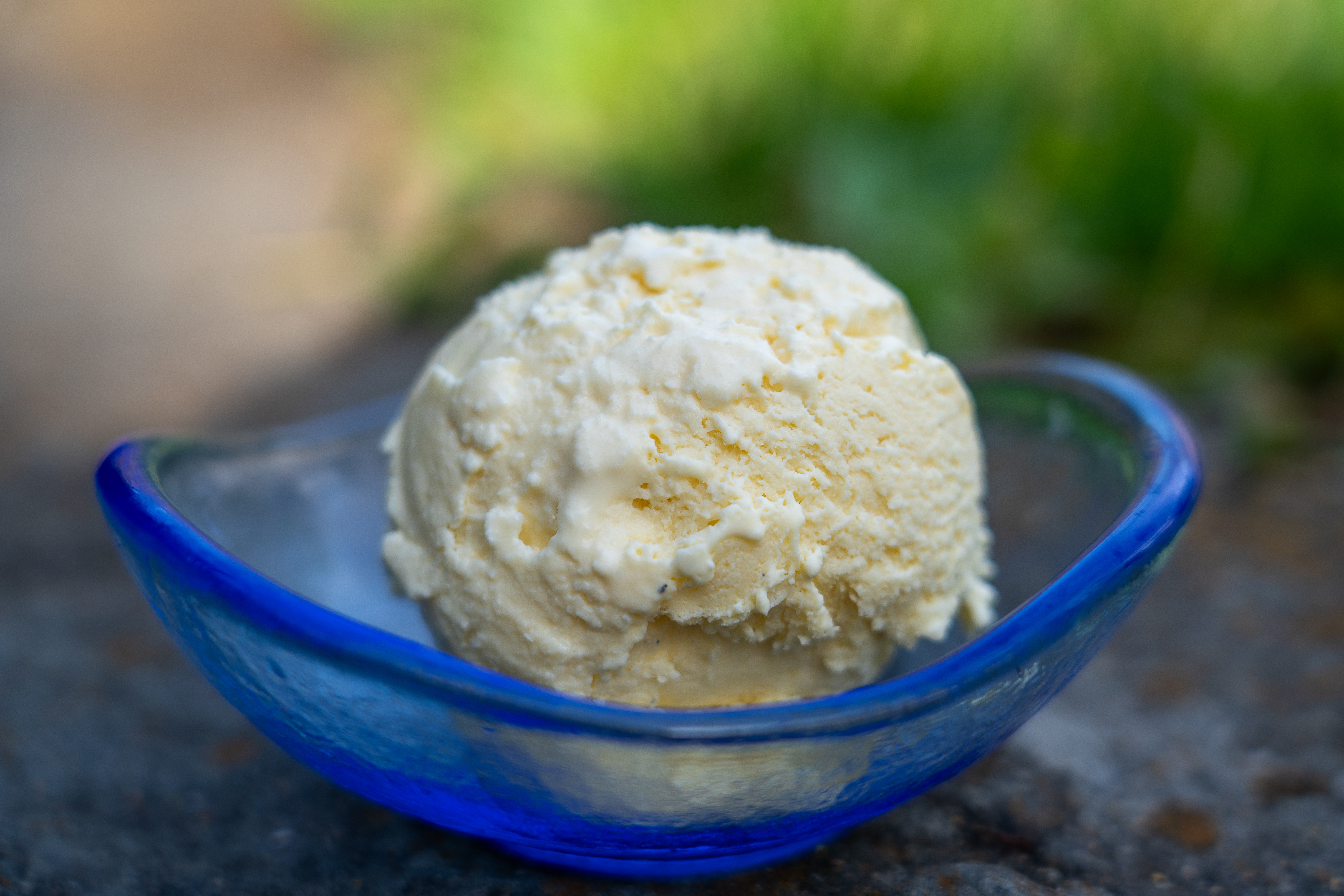
By some counts, Ireland has over 600 varieties of seaweed growing abundantly in its waters. After learning that many are edible, I immediately set to work experimenting. I collected and dried as many varieties of seaweed as I could find. From there I made seaweed seasoning blends, a seaweed-laden brine for pickled vegetables from the farm, and focaccia and sourdough bread flecked with fine dried seaweed to provide an unexpected burst of umami and brightness. But it is the following recipe, for seaweed ice cream, that I believe best highlights the offerings of an organic farm and the sea combined: thick cream and milk, fresh eggs, and all manner of dried seaweeds.
After returning to New York, I knew that I wanted to continue sea foraging on the South Fork. I also knew that the incomparable bounty of East End farms, combined with the offerings of the Atlantic Ocean, would mean that my seaweed ice cream could find a perfect new home on Long Island.
How to Forage And Dry Seaweed
An eclectic group of seaweeds grows along the bay beaches of Long Island, including sugar kelp, bladderwrack, and sea lettuce, which are all suggested for the following recipe. Sugar kelp is identifiable by its yellowish-brown hue and long, ruffled ribbon look. Sea lettuce is a bright translucent green, very thin, and looks remarkably like small lettuce leaves or cellophane. And bladderwrack is usually a deep olive green or a dark brown, identifiable by its branching fronds that have air-filled “bladders” that look like bubbles. There are other edible seaweeds in our region, but these three are common and easily identifiable.
Only harvest seaweed from visibly clean water. Avoid any areas with boats, heavy industry, or any other obvious contaminants. You can also check the Coastal Beach Water Quality Map online at the New York State Department of Health, or view current data at the Concerned Citizens of Montauk website. It is best to look for seaweed on a rocky outcrop or stone jetty during a very low tide when the best beds are likely to be exposed. I suggest the rocky beaches of Montauk, at low tide, as a good starting point. Harvest live seaweed by cutting with sharp scissors or a knife, well above the point of growth. Harvest sparsely and take less than one-third of any individual plant to allow for regrowth.
Once home, clean seaweed with cold water to wash away any debris. Dry out seaweed by laying it on baking trays in front of a window that gets direct sunlight. Alternatively, place it in a slow oven at 150 to 170 degrees for 20 to 40 minutes or until fully dry, flipping halfway through and watching to prevent burning.
Once seaweed is dry, grind it in a spice grinder or crush it by hand until small but not so fine that the pieces would pass through a sieve.
If unable to forage for seaweed, storebought kombu can be substituted. However, if using store-bought seaweed, you may want to increase the amount used in order to ensure the flavor remains robust. If using store-bought kombu, grind or crush to the desired size as indicated above.
Recipe
YIELD approximately 1 pint
Ingredients
Preparation
- Split vanilla bean pod lengthwise, scrape seeds into heavy saucepan. Add milk and seaweed. Heat to just below boiling; remove from heat.
- Cover and steep for 1 hour. The longer the steep, the stronger the flavor.
- While milk cools, whisk egg yolks and sugar together until pale and fluffy.
- Taste milk to ensure seaweed has infused sufficiently. It should have a bright, salty, umami flavor. The flavor will be very strong but will mellow as ingredients are incorporated and ice cream is frozen. Taste profile will vary depending on varieties used. If it needs more time, steep for another 5 to 10 minutes and taste again.
- When steeping is done, strain milk through fine sieve into a bowl, pressing seaweed firmly with back of a spoon. Scrape mixture that has gathered on underside of sieve into bowl.
- Slowly pour warm milk into egg and sugar mixture, stirring constantly.
- Transfer to clean saucepan and cook over low heat, stirring constantly, until custard thickens enough to coat the back of a metal spoon (170 to 175 F.).
- Pour cream into a large bowl. Strain custard through fine-mesh sieve into cream and stir well to combine. Cool until room temperature.
- Churn in ice cream machine according to the manufacturer’s instructions.
- Serve topped with flaky salt and enjoy outside on a warm evening.