
Stalking Springtime
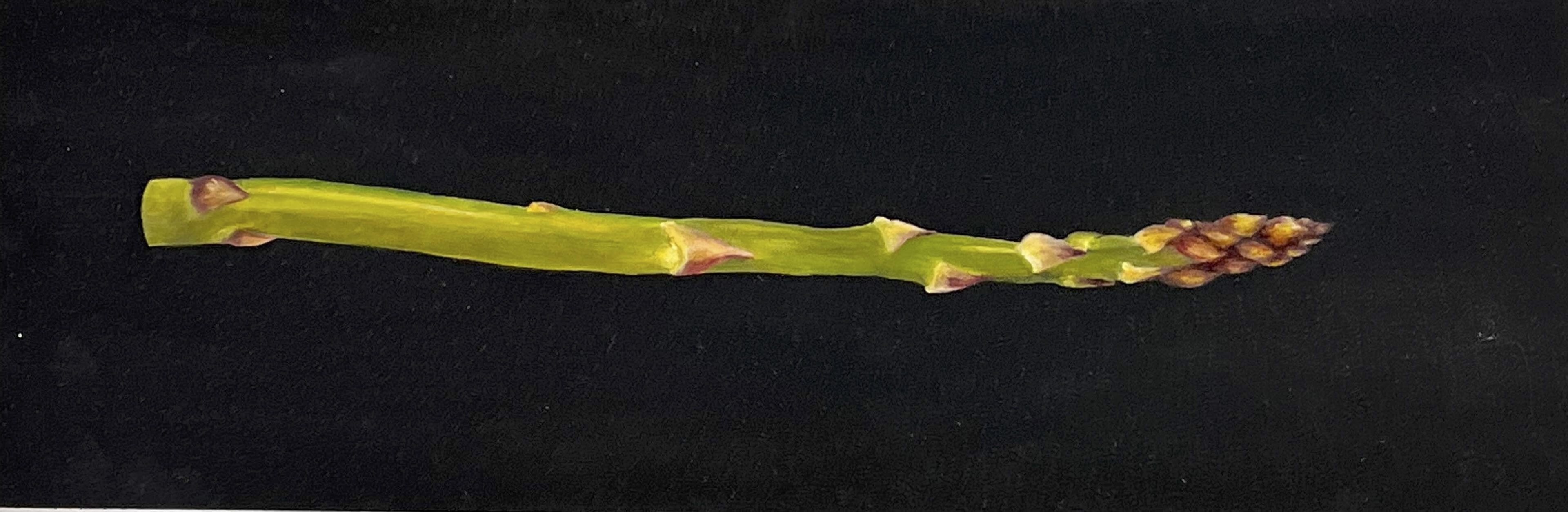
People of “a certain age” here recall the social phenomenon known as Asparagus Beach: Every afternoon on the ocean beach at Atlantic Avenue in Amagansett, all the single men and women would casually stand up and look around at one-another, weighing the potential date-night candidates and resembling stalks of asparagus. There were so many human stalks you could see them from Indian Wells on a clear day. In July 1968, The New York Times published an article about dating habits that dubbed this strip of beach a “quintessential pickup strip.”
Putting the social history of Asparagus Beach aside, the quirky nickname references a crop that thrives on the South Fork. Not on the dunes, of course, but rather in the rich soils prized by generations of farmers — with thanks to the primordial glaciers — faithfully executing its duty as one of the first vegetables that can be harvested each spring.
But blink your eyes and you’ll miss it. Asparagus season begins in late April and sprints toward the middle of June at East End farms; strawberries are perhaps the only crop more seasonally fleeting. Matt Quirk, the farm director of Share the Harvest Farm in East Hampton (also known as “the food-pantry farm,” because they grow vegetables for donation), knows the snap and taste of a freshly clipped stalk grown in the farm’s patch.
“They’re really delicious, especially in a salad,” he says.
In cultivating this plant, which will come to an interested grower in the form of “clumps of roots” that should be planted into fairly deep trenches, Quirk advises the first year you let them “come up out of the ground like sticks” . . . and then let them go to seed. It’s also a good idea to put a layer of wood chips or straw above the soil. After that initial year, a grower can harvest in the second year, as soon as the stalks are 10 to 12 inches tall.
“You do that for, like, a month and a half or two months,” Quirk says. At that point, it’s advisable to stop harvesting. “It’s almost like you’re kind of giving them a break. If you were to just keep cutting and cutting and cutting, the chances are higher that it wouldn’t come back the next year.”
Using a small, slim knife to cut the stalks just underneath the soil will help prevent disease and fungus growth. Chop off that woody-textured bottom-most inch or two before attempting to cook.
Alex Bujoreanu, a chef, native of Spain, and the culinary mastermind at the restaurant R.aire in Hampton Bays, says asparagus is one of the most versatile vegetables available at this time of year.
“When it’s properly prepared, it’s incredibly easy to work with and adapts well to a variety of dishes,” Bujoreanu says. “It’s also highly nutritious, especially when foraged wild. . . . It has a bold, distinctive flavor that can stand on its own, but also pairs well with a wide range of ingredients. On the flip side, its fibrous texture can be a challenge, especially when blending it into soups or purées, where it can become stringy if not properly handled.”
He prefers a simple approach to cooking asparagus: He uses a flat cooking surface, olive oil, salt, and pepper — “just a few minutes on each side to maintain its natural bite and crisp texture,” he says. If the menu calls for more complexity, though, “I’ll build on it with elements like chanterelle mushrooms, a sous-vide egg, and a Manchego foam to add richness and depth.”
Cooking time and temperature are key factors. “You want the pan quite hot to achieve a nice sear while maintaining that crisp texture. If you’re working with larger, jumbo asparagus, it’s better to lower the heat slightly and give it a bit more time so it cooks through evenly without burning on the outside,” says Bujoreanu, who hinted at its potential appearance on the spring menu at R.aire.
It pairs well, he says, with a wide range of ingredients, “especially proteins like steak or delicate white fish. I also like serving it alongside more neutral components, items like white rice as part of a composed dish, which allows the asparagus to really stand out. In terms of flavor, it works beautifully with earthy elements, whether that’s mushrooms or a more grounded, savory sauce that complements its natural profile.
The most common varieties are green and white asparagus, but at Share the Harvest, a rarer color popped up quite unexpectedly: purple. It’s slightly sweeter and is thought to contain more antioxidants than its green and white relatives, Quirk says. Plot twist: the purple ones turn green when cooked.
While modern farming methods and shipping logistics allow asparagus to be available year round in supermarkets, true asparagus snobs know that now is the ideal time to farm-stand up, look around, and choose the best of the bunch.