
Surfcasting for Dummies
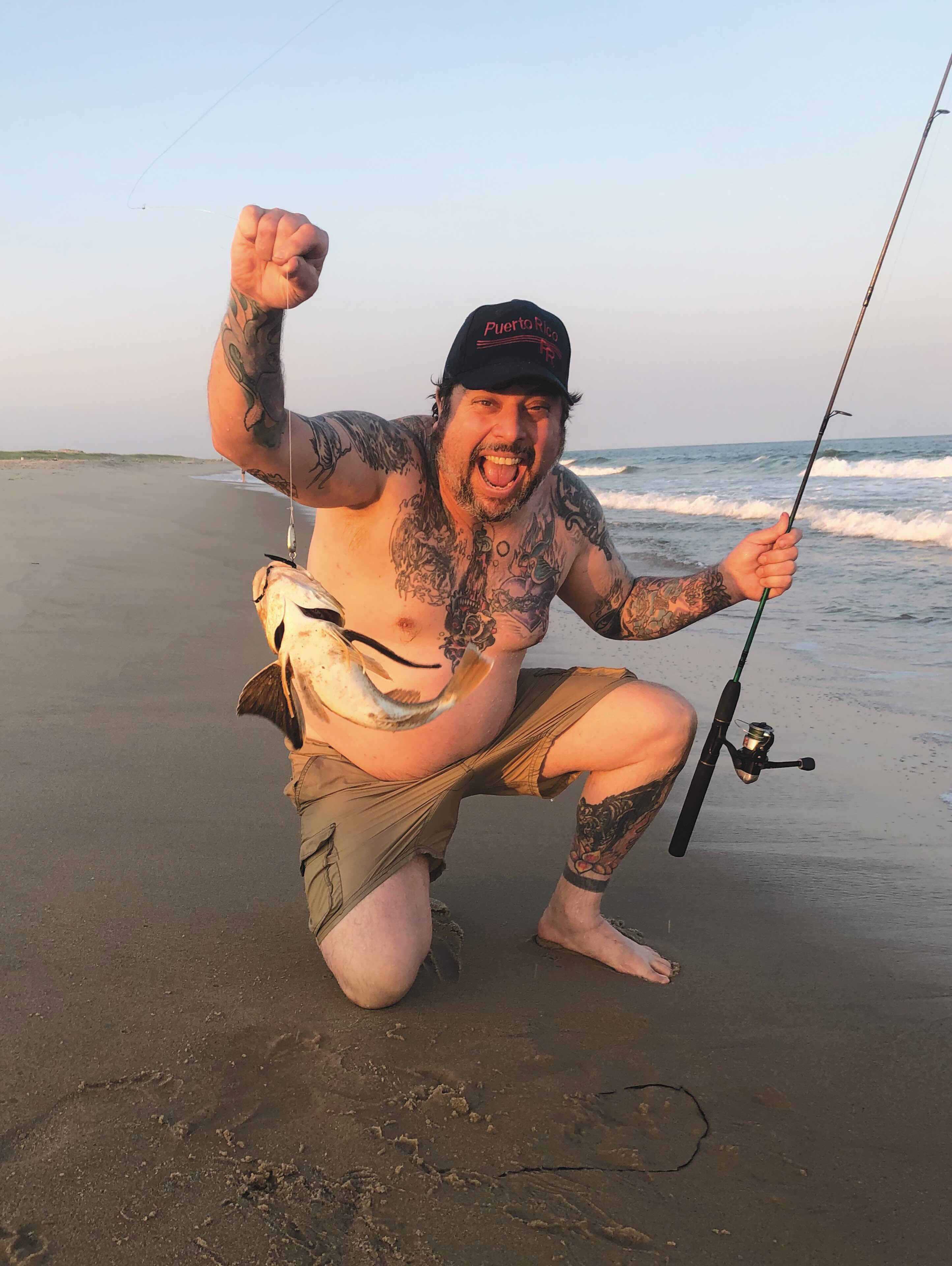
Fishing is for everyone, the fit and the infirm, the young and old, the seasoned Quint and the clueless neophyte, the bubby and the citiot alike.
It is exhilarating, challenging, and frequently frustrating, particularly when the water is boiling with fish just past the reach of your cast. But I — and probably most anglers — would rather spend an entire day fishing and not catching than doing any other activity (except, of course, spending an entire day fishing and catching).
But where to begin? I imagine that fishing to a non-fisher person can be daunting, but fishing is an ancient, elemental survival practice. If a Neanderthal can do it, you can too.
Every old-timer will tell you: Simplicity is paramount. You will never catch a fish if you are not inclined to try. If you see me surfcasting, for example, I will most likely have a pole or two and a pair of pliers — not even a tackle box.
Anglers 16 or older must enroll in New York State’s Recreational Marine Fishing Registry. It is very important to register, as your information is collected and then used to study recreational fishing patterns up and down the East Coast. You otherwise do not need a license as you would for freshwater fishing or shellfishing.
Most importantly, treat your catch with respect and minimize trauma, particularly if you are practicing catch and release.
As for the gear, I will offer a cursory introduction to the odds and sods, as a now long-gone old bubby friend of mine used to call them.
Be warned. When you snag your first beautiful striper off the jetty at Georgica or reel in a bluefish from the beach at Tyndall Point, your brain chemistry, and your relationship to food, will be profoundly reshaped.
Rods and Reels
For surfcasting, you will need a rod and a reel. Typical surfcasting rods are nine to 12 feet long. However, if you find yourself on the beach with a lot of birds, do not be afraid to fish with a shorter seven-foot rod.
Terminal Tackle
“Terminal tackle” refers to the lure that we tie to the end of the fishing line.The lure you use depends on the beach conditions.
Diamond Jig
Named for its shape, the diamond jig is a shiny metal lure with a rubber hook and can be used to imitate forage fish or activate the striking instinct of the target fish. It can also imitate a sand eel/sand lance. It is one of the most effective and intuitive lures, ideal for both the novice and seasoned surfcaster.
Popping Plug
The second lure I would recommend for successful surfcasting is the popping plug. The popping plug is a surface-action lure with a hollow nose that “pops” along the surface of the water when reeled, mimicking fleeing bait, forage fish, and squid. Bluefish, bass and weakfish are particularly attracted to the splashing of the popping plug.
Bucktail
The last lure that every surfcaster needs in their arsenal is the mighty bucktail (also called the “smiling bill”). The bucktail is a lead-headed lure with deer tail hair tied around it. A second piece of bait made of pork rind, called a trailer, can be attached to the lure. The bucktail is a favorite of fluke, striped bass, weakfish, and blues.
Baits
Surfcasters use additional attractants — called “baits” — to increase their chance of catching a fish. Eels, bunker, clams, and squid are favorites of our North American species. There are also a number of synthetic products that can be effective. For striped bass, rigging a fresh clam or a chunk of bunker on a circle hook often does the trick.
Species
There is a wealth of species that you can encounter on an East End beach. The most prevalent are bluefish, striped bass, shad, and fluke — but sea robins, dogfish, stingray, mackerel, herring, and the occasional Mylar balloon will also make a cameo.
One of the most thrilling aspects of surfcasting, and fishing in general, is that once you have a fish on your line, you really have no idea what species it is. You can make an educated guess. Perhaps it is pulling down and away like a striper or actively hugging the bottom like a fluke. You really don’t know for certain until it is in your sight.
The best fight, pound for pound, is with a bluefish.
Limits
New York State imposes strict size and “bag” limits. These restrictions are real and they are crucial for conservation. When it comes to striped bass, recreational fishermen are limited to one fish per day with a slot size of 28 to 31 inches. Fluke (sometimes called summer flounder) have a 19-inch minimum length in July, which increases to 19.5 inches on August 2, and a limit of three fish per day. Weakfish: 16-inch minimum, one fish per day. Bluefish have no size restrictions but the bag limit is five fish per day.
Beaches
An important skill for the surfcaster to hone is how to read the beach. There are several questions to ask yourself: Are birds diving for their dinner? Are fish breaking the surface? Are there rip currents in the water? Is the sea rough?
While rough seas can draw fish, rip currents are a no-go. Also, if the wind is too strong to cast, and seas are dangerous, fish will not strike. What you particularly want to look for when choosing where to position yourself at the beach is structure, either man-made, topographical, or tidal. Look for the “suck-out,” an area that a human wouldn’t want to swim, but that the bigger fish use to find smaller fish to feed on.
Wind, tide, and wave action can change appreciably by the quarter-hour, so if the beach looks too messy to fish, go eat a sandwich and come back later. Fish can be caught in many different conditions and at all times of day or night.
It’s important to just get out there. Remember, the most effective technique in your arsenal is enthusiasm.