
Beach-Rose Salt
Each summer I wait eagerly for August, when the peaches in my home garden are finally edible. Each one is unique: Some look like they came from the grocery store, smooth and uncanny, and others are beautifully misshapen, riddled with dents and other signs of a life free from human interference. Carve away the blemishes and they are all equally delicious.
But the wait for my backyard’s peaches can feel very long. My desire to find something in the meantime, unbound by the ordinary calendar of cultivated crops, led me to foraging. Searching for edible wild plants allows us to mark the passage of time not with what humans are able to grow, but instead with what the earth already provides.
Foraging asks us to look at the familiar world around us with a newfound reverence and intention. An East End beach, for instance, is made beautiful by the hundreds of small elements that make it up: beachgrass and beach glass, driftwood, washed-up seaweed, the odd sighting of a dolphin or whale. The foraging mind-set lets us see these elements as individual signs of nature’s genius, deserving of time and attention in their own right.
This way of observing led me to look closely at the actual shoreline of the East End’s beloved beaches for the promise of anything edible. I soon came across the beach rose, rosa rugosa, which translates to “wrinkled rose” in Latin.
Knowing that the petals of all rose species are edible, including those of this rugged and coastal variety, I began seeking out the plant. I was delighted to find that a species of rose was not only able to grow near the shore but seemed to thrive at every beach I visited. This is the feeling I chase when foraging: finding some small fixture of the natural landscape and seeing it, seemingly, for the very first time.
If you’ve been to a South Fork beach, you will recognize rosa rugosa; it’s the blazing-pink and blowsy wild flower you see in the dunes from Napeague to Gibson Beach, the one covered in fat, orange rosehips in the fall. It is a perennial, woody shrub native to East Asia that has naturalized across the Northeastern U.S., even becoming invasive in some areas because of its hardy nature and ability to outcompete native flora. Rosa rugosa can also be found lining yards the length of Long Island, where enthusiasts may prefer a less showy alternative to the ruffled and frilled blush-pink and deep-red “double roses” cultivated to line walkways and gardens.
This plant has come to thrive on sand dunes along the coast, because it can tolerate windy climates and the spray of salt water. It actually helps to stabilize the dunes and combat beach erosion. Because of climate change, Montauk’s sea levels are projected to increase by 15 to 20 inches by the 2050s and by 32 to 54 inches by 2100, compared to baseline levels set between 1995 and 2014, according to the New York State Climate Impacts Assessment. That experts expect sea levels to rise by two or three feet by the end of the century makes coastal stabilization, especially through natural means, more important than ever.
The beach rose can be identified by its dark-green, heavily veined, and serrated leaves, whose wrinkled appearance lends the plant its scientific name. As with garden varieties of rose, the stem is covered by spiky thorns. The plant also produces those vitamin-rich rosehips that, when ripe in September, turn from green to a deep, burnt red
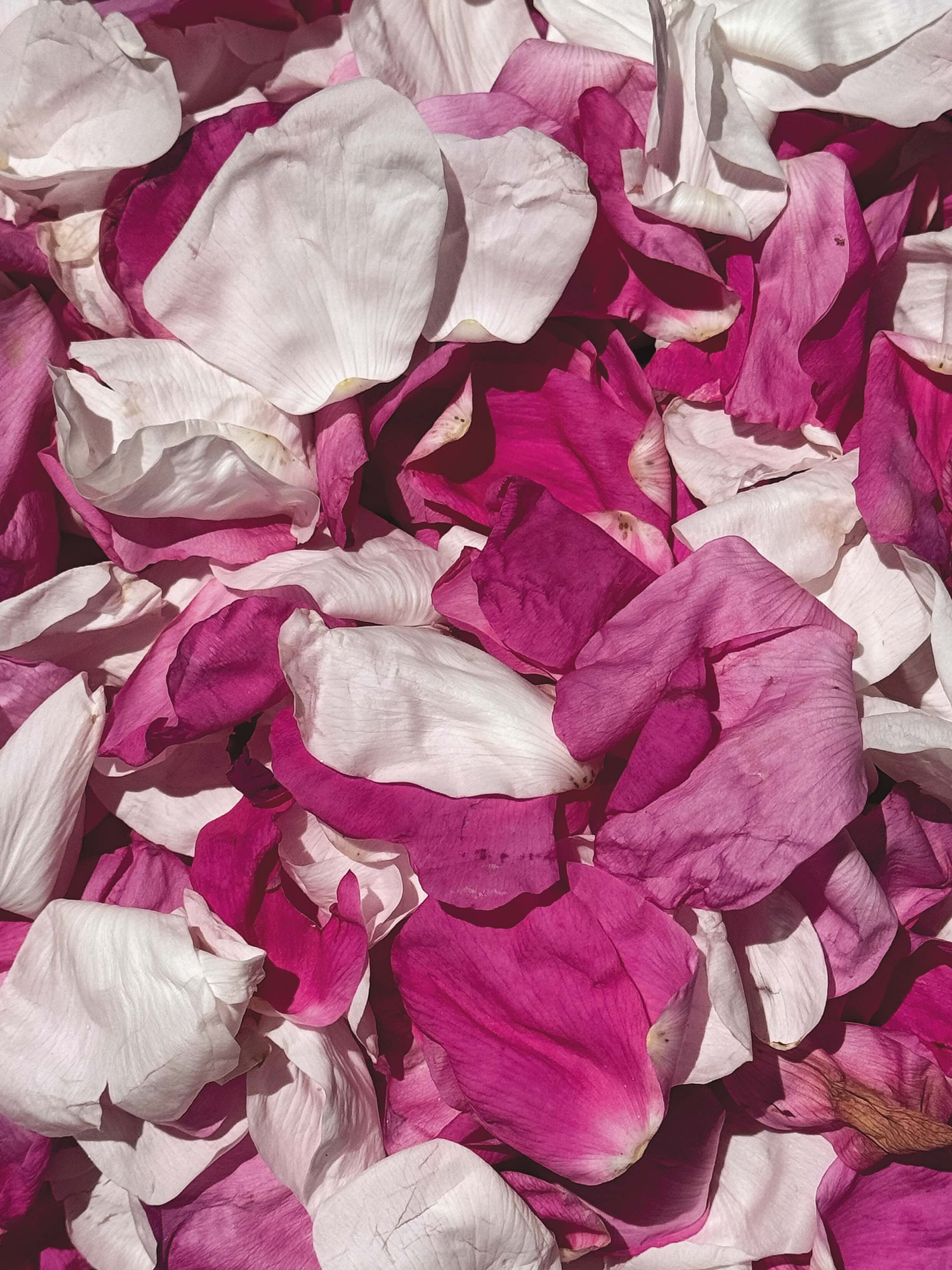
dish-orange and can be transformed into jams and syrups, or steeped into a tart and fruity immune-support tea. Although the striking magenta is most common here on the South Fork, the plant’s heavily perfumed flowers bloom in shades of white and light pink, too. Unlike the more common and highly cultivated rose varieties, the petals of the beach rose are large and velvety to the touch.
The scent of a beach rose, combined with the salty minerality of the seaside air, makes for a heady and enchanting combination. I set out to preserve the uniqueness of this olfactory experience by crafting a beach rose-infused salt, the recipe for which you can find below.
FORAGING INSTRUCTIONs
Search along the edges of East End beaches, particularly near dunes and beach entrances. While foraging, be careful not to damage the dunes — in fact, keep off the dunes entirely in the Atlantic Double Dunes Preserve, a protected area in Amagansett, and anywhere else a "Keep Off" sign is posted. Look for rosa rugosa beside a beach parking lot or friend’s driveway instead.
Pluck only the petals, leaving the rest of the plant to grow. Always ensure that the plant is abundant enough that a small harvest will not damage the bloom. Only pick plants that have not been sprayed with pesticides or contaminated in any way.
Beach-Rose Salt Recipe
Ingredients
2 C. rosa rugosa petals
1 C. salt (either kosher or flaky sea salt)
These amounts can be scaled up or down based on preference and how many petals you are able to find. The more you add, the stronger the rose flavor will be.
Preparation
Wash and dry rose petals.
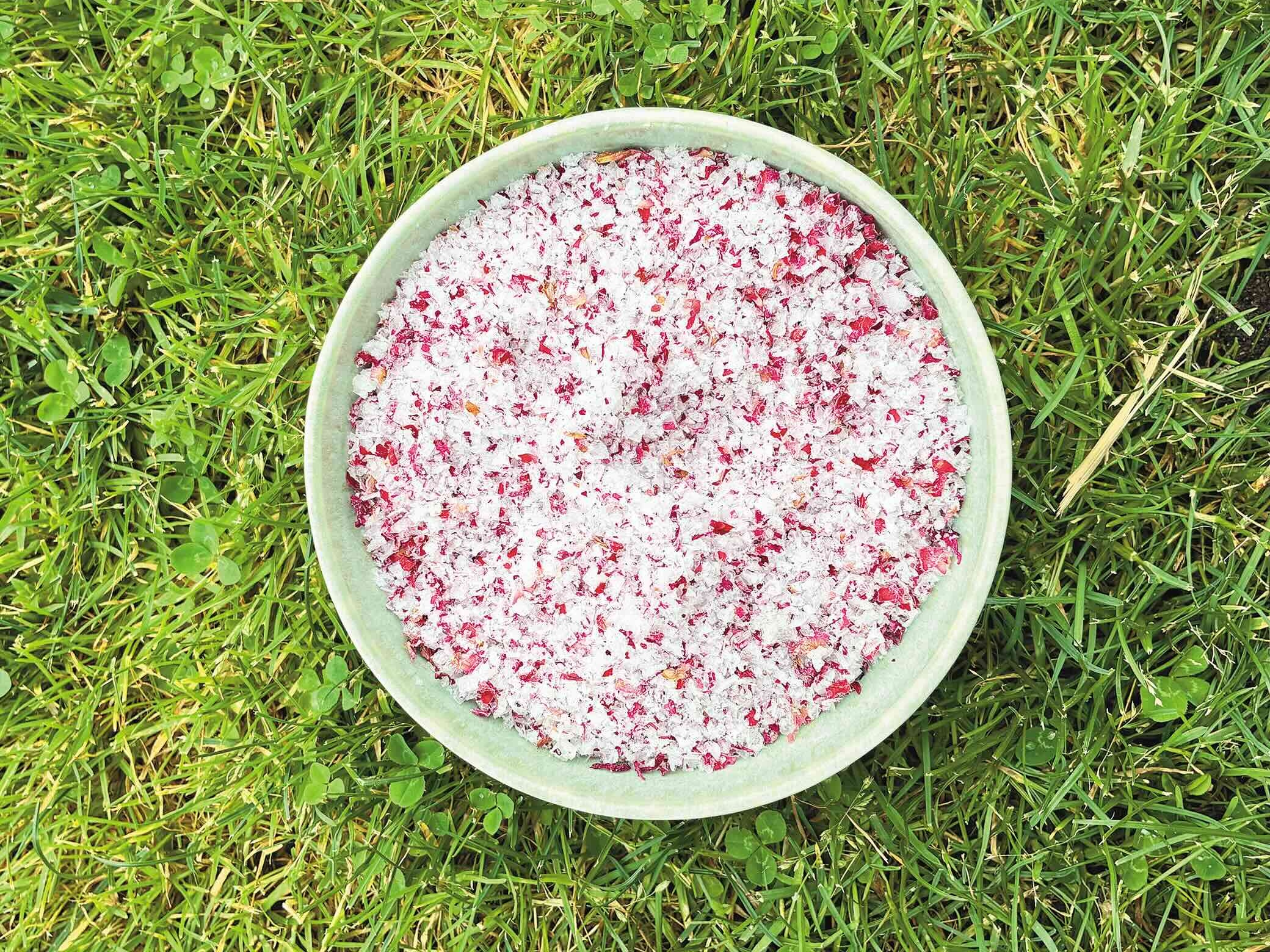
If using kosher salt, place petals and salt in a food processor and process until the salt turns pink and the beach rose petals are very small and well incorporated. If using sea salt, place petals and ¼ C. of the flaky salt in a food processor and mix until well incorporated. Once processed, add the rest of the salt to a bowl with the mixture from the food processor. Mix together by hand in order to maintain the size of the salt crystals (don’t let it turn into a powder).
Lay out the beautifully pink beach rose salt on a baking tray and allow to dry for about 24 hours.
After checking that the mixture is entirely dry, transfer it to a sealed jar.
Enjoy as a finishing salt atop desserts or savory vegetable and meat dishes.