
When Surfers Were Cowboys
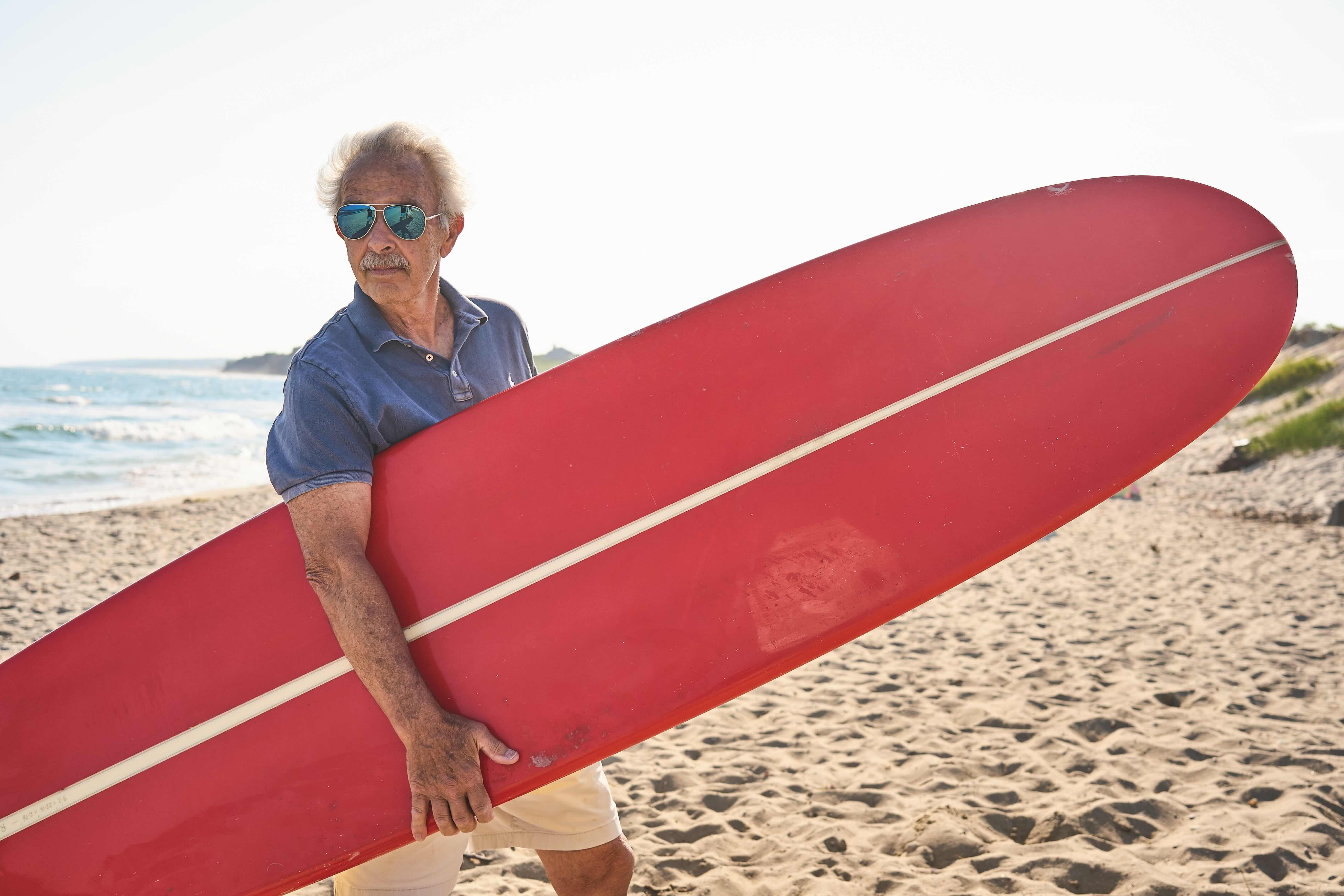
Ounce upon a time, there were fewer than five surfers out at Ditch Plain on any given day. Once upon a time, you could count the number of surfers in all of Montauk on two hands — and you could buy a surf shop two blocks from the ocean for $34,000.
And there was a time before that when there were no surfers at all. When this was a hardscrabble village of fishing, families, and tradespeople.
Change is like gravity: unceasing and powerful, beautiful and painful. There is no fighting its force. The irony is that many of those fighting changes as they happen out east are enamored with the idea of unceasing, inevitable flow.
Surfers, and surfing, have played a strong role in the development of Montauk. The place, and the pastime, are evolving together, side by side, and there are growing pains. But there is something tender and pure in the way that this relationship began that can still be felt today, a love of place carefully tended by the people who were there when surfing and Montauk first met.
So much is different, but so much hasn’t changed, and in order to understand this, we need to start back at the beginning.
The first surfers in Montauk were, largely, not from Montauk. They learned at Gilgo or Long Beach, boys from Amityville and Levittown who grew up around boats, splashing in the ocean or in community pools. As surfing reached a broader audience in the early 1960s — the Beach Boys years — these adolescent waterdogs took to it like flies to honey, supported and supplied by original Long Island surf shops like the Beachcomber or Emilio’s.
Boards in those days were long and heavy beasts of 60 pounds or more, and these teens and preteens, too young to have wheels of their own, had to lug them to and fro. Hitchhiking was the standard mode of transportation. Charlie Weimar, one of Montauk’s early explorers, remembers a fringe benefit of the proliferation of to shorter surfboards: “No one would pick you up because you had a longboard,” he says, “then all of a sudden the shortboards happen and it’s, like, oh this is cool. People will pick you up now.”
As the boys progressed they began to travel farther and farther afield in search of waves. Some encountered Montauk on the way to Block Island for fishing trips. Others had a friendly young teacher take them up to Ditch. They all seem to have felt an immediate attraction, to the place: empty surf and wild coastline, littered with clams and teeming with fish. As high school granted these young people some teenage independence, they would spend the weekends sleeping in their cars and using the facilities at the commercial campground near Ditch Plain known today as Montauk Shores Condominium, or just the trailer park. In 1969 you paid $20 for a week in a 29-by-50-foot campsite.
Life was simple. They would surf all day, fish for their food, and return (mostly) to school on Monday morning. A small group of surfers developed, people like Lee Bieler, the aforementioned Charlie Weimar, Tony Caramanico, Norman Stavin, Hank Heckel, the DePasquale brothers, Jimmy Goldberg, Dave Nelson, John Schneller, the late Russell Drumm, and Allan Weisbecker, and a handful more. These were young men under the spell of a surfing life, baby boomers ready to help each other participate in the growth of a new community.
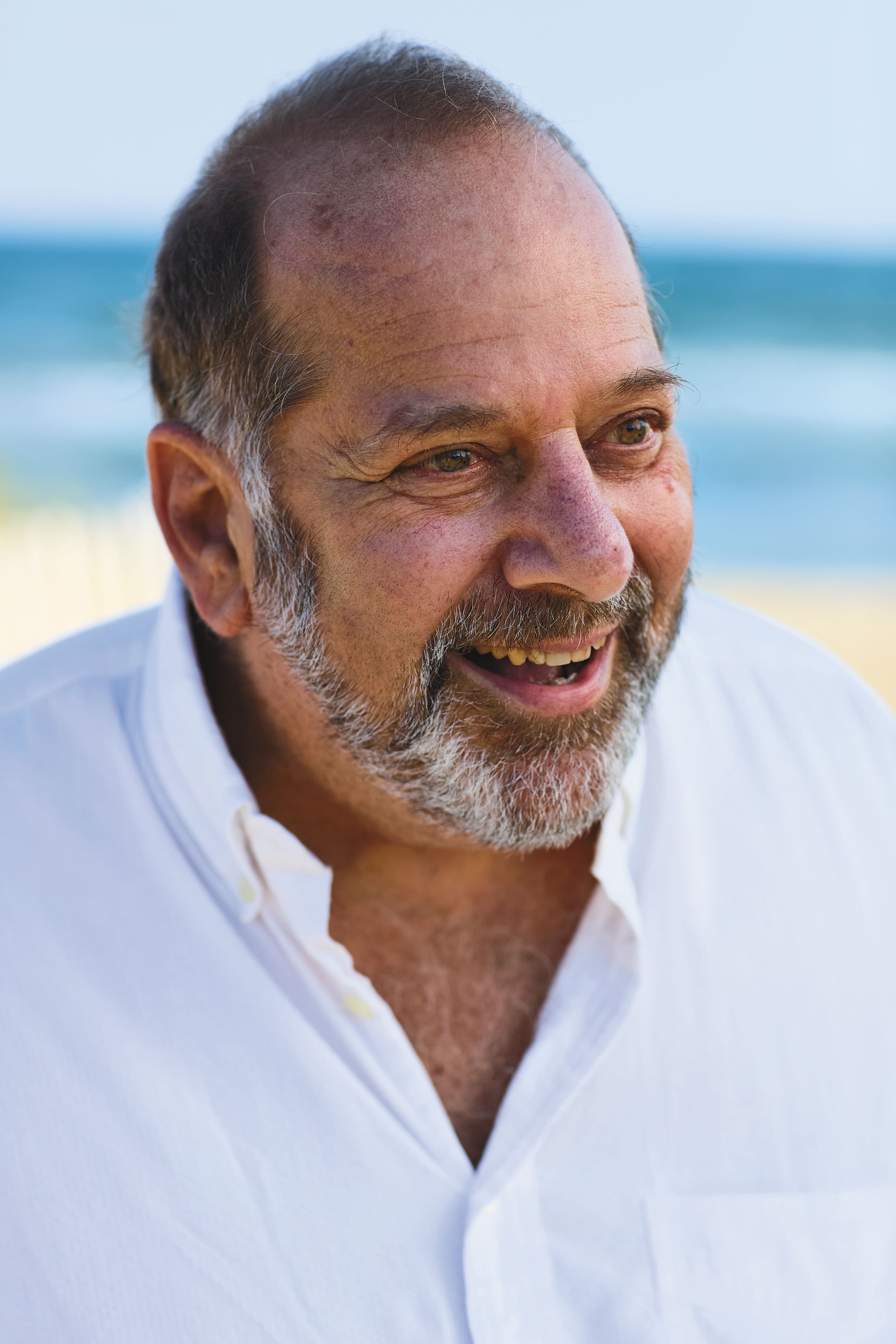
For many reasons, probably both conscious and not, this was a group largely uninterested in following in the footsteps of a conventional American life. They were growing up in an era of civil rights unrest and war in Vietnam. Youth were beginning to scout a new way forward and the systems around them were beginning to show their cracks. They wanted to live in the moment. They had surfing, they had Montauk, and that was more than enough.
Graduations brought the first of these early explorers out east full time between 1967 and 1969. They were a mixed bag. “All the nuts fell off the trees and rolled out to Montauk,” as Drumm once put it. There were the young creatives, writers like Drumm and Weisbecker, called to Montauk for its artistic energy; there were fishermen and construction workers like Weimar. They bought cars for $100 that they could sell for $100. They were drinking, clamming, and waiting for the wind to switch offshore. The eccentric and flamboyant queen of the campground, Sam Sloman, used to call the boys his “‘fruit flies.” They danced around the campfire, drinking deep from the elixir of youth.
As hard as it might be to imagine today, surfing may have been cool, but it wasn’t exactly socially acceptable. Surfers were operating outside the lines of polite society in beach communities all over the country. They were deadbeats and vagabonds, looked down on as societal outcasts not contributing their dues. There was nothing to be gained from the sport’s pursuit beyond the feeling of the glide and the joy that flight brings.
These were their cowboy days, young men called to the unknown, to exploration, to risk. The rolling aquatic plains of the Atlantic Ocean were the edge of their frontier.
Surfing as a modern, mainland activity was just about as old as the people doing it. There was no Surfline, no surf lessons, no surf coaches. Tips and tricks were passed around by word of mouth, progress made through trial and error. Discovery of new waves went much the same way, and for the first few seasons all eyes were fixed on Ditch Plain.
But the discovery of the breaks out past Camp Hero opened a new world of opportunity.
Beyond the rolling beach breaks of Ditch Plain lie wild and rocky points, cobblestoned A-frames feathering in front of sheer cliffs, a coastal geography that supported many different wind and swell directions. The pioneers had struck gold. Nelson, one of Sloman’s fruit flies from UpIsland in Levittown, remembers a pair of knot-kneed Californians (knot-kneed because they’d spent so much time paddling on their shins that they’d developed buildups of bone below their kneecaps — evidence that their advice should be heeded) giving them the tip to head toward the Lighthouse.
Bieler remembers Michael Tabeling — a widely admired surfer from Florida and a frequent guest of the Montauk crew — suggesting offhandedly one stormy afternoon that they go check out the Lighthouse: “So Tabeling goes, ‘You know what? We ought to go up to the Lighthouse and see what’s going on in that little cove in there.’ I went, ‘Yeah, let’s go.’ So me, Tony, and Michael jumped in my van and we went up there. It was a gorgeous day, offshore wind, sunny.” They arrived to head-high offshore peaks and not a soul around.
From then on, Bieler and his crew would strap surfboards to the roof of his green 1974 Porsche 911 and barrel through the bushes on the long way around, using the old, overgrown road on the shore side of Camp Hero. They had to avoid the fun police stationed at the Montauk Air Force Station. Surfing out there was technically illegal; Weimar remembers signs posted in the parking lot specifically prohibiting it. Bieler recounts stories of an Air Force guard driving a red Mustang up on the beach and screaming at them to paddle in. They never did and would drive the direct route home, straight past the guardhouse, beaming surfed-out smiles.
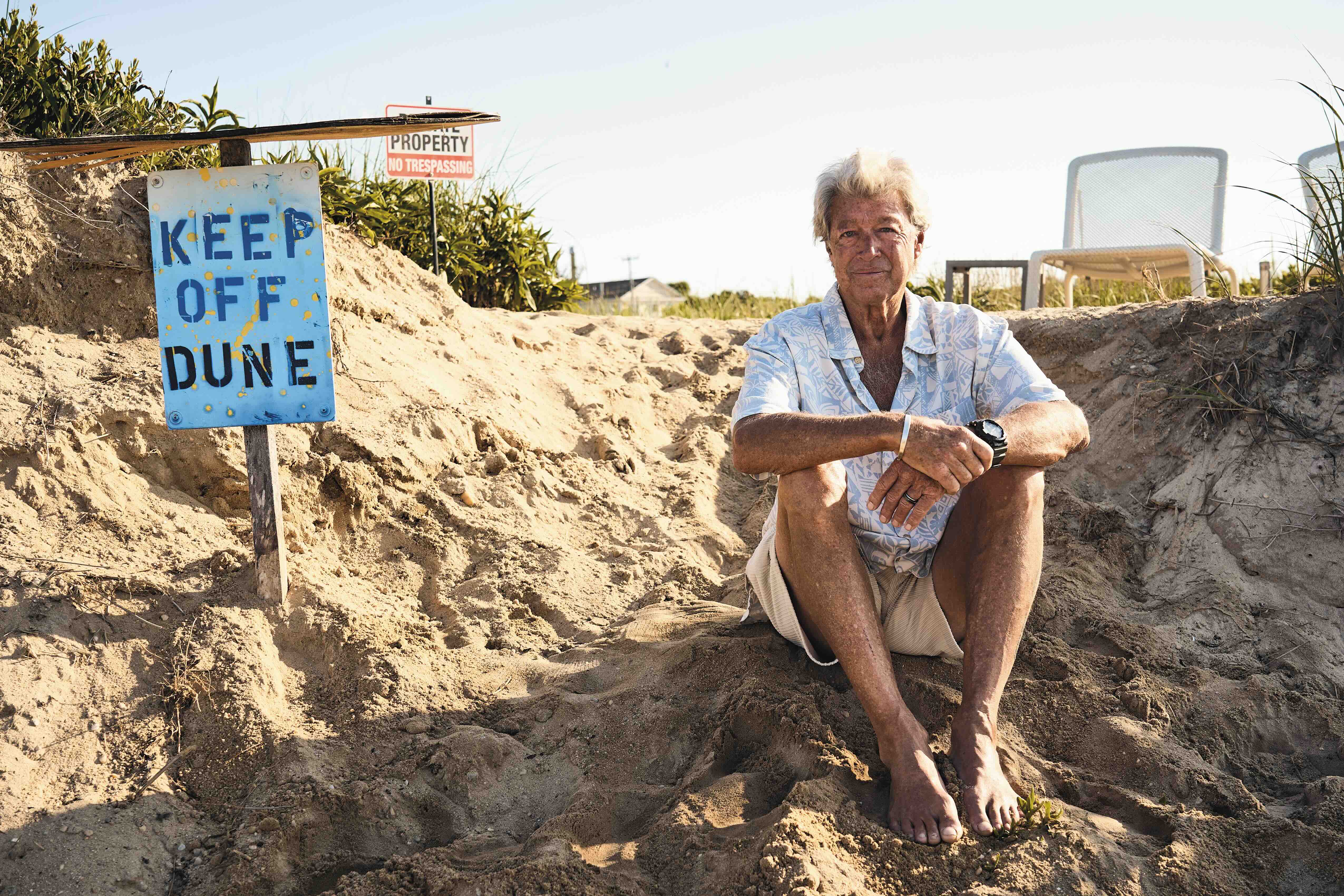
In 1970, Bieler got a call from his childhood friend, Tony Caramanico. Bieler was in St. Thomas at the time, working at a hotel and surfing the island’s razor-sharp reefs. “So, Tony calls me, and goes, ‘I found this little building in Montauk. I think we could open up a surf shop there. I know you’re not doing anything down in St. Thomas, but you know, hanging and surfing.’ ” It had always been the friends’ dream to open a surf shop together. Caramanico was right, so Bieler hopped on a flight and returned. The pair bought the Albatross for a measly $34,000, and the first surf shop in Montauk was born. Driving over the hill and down into the village you can still see a large mural of a bird painted on the roof of the Albatross’s former home, the old bird peeling away in the summer sun. (The building’s current inhabitant? A restaurant, Bird on the Roof.)
The two lived upstairs and sold skateboards, surfboards, and surf apparel as well as some less above-board contraband. Eventually, they started making breakfast, too, with 50 chairs, a sandwich warming machine, and absolutely no restaurant experience. But the shop/restaurant quickly became a community hub. It’s where Lee and his pals would meet the artist and photographer Peter Beard, who owned the home above a favorite secluded break. Fast friendship with Beard gave the group easy access to one of the region’s best waves, a sweet pad to kick back in, and introductions to the Rolling Stones and, a bit later, Beard’s supermodel wife, Cheryl Tiegs.
The community grew as the first crop of young surfers got older, put down roots, established businesses, settled into seasonal routines, and had children who would soon be joining them in the lineup. As the population expanded, and outsider surfers ventured farther north and east, the East End crew did what it could to protect the harmony of their adopted home — and keep the number of surfers in the water low.
Surfers are tribesmen. A spot, their territory. As with any group of human beings, a hierarchy forms, both spoken and unspoken. Position within said tribe is earned through time spent, and both natural and practiced skill. Beyond the broader community pecking order, the same ordering occurs within the lineup every session. Starting at the peak, the top dogs get their pick, and the rest are left with the trimmings. Cross your fingers for a benevolent king and a generous troop of knights.
In a small town, a place where surfing really matters, to reach this inner circle — to join the respected at the top of the pyramid — is a point of tremendous pride. It is to become royalty.
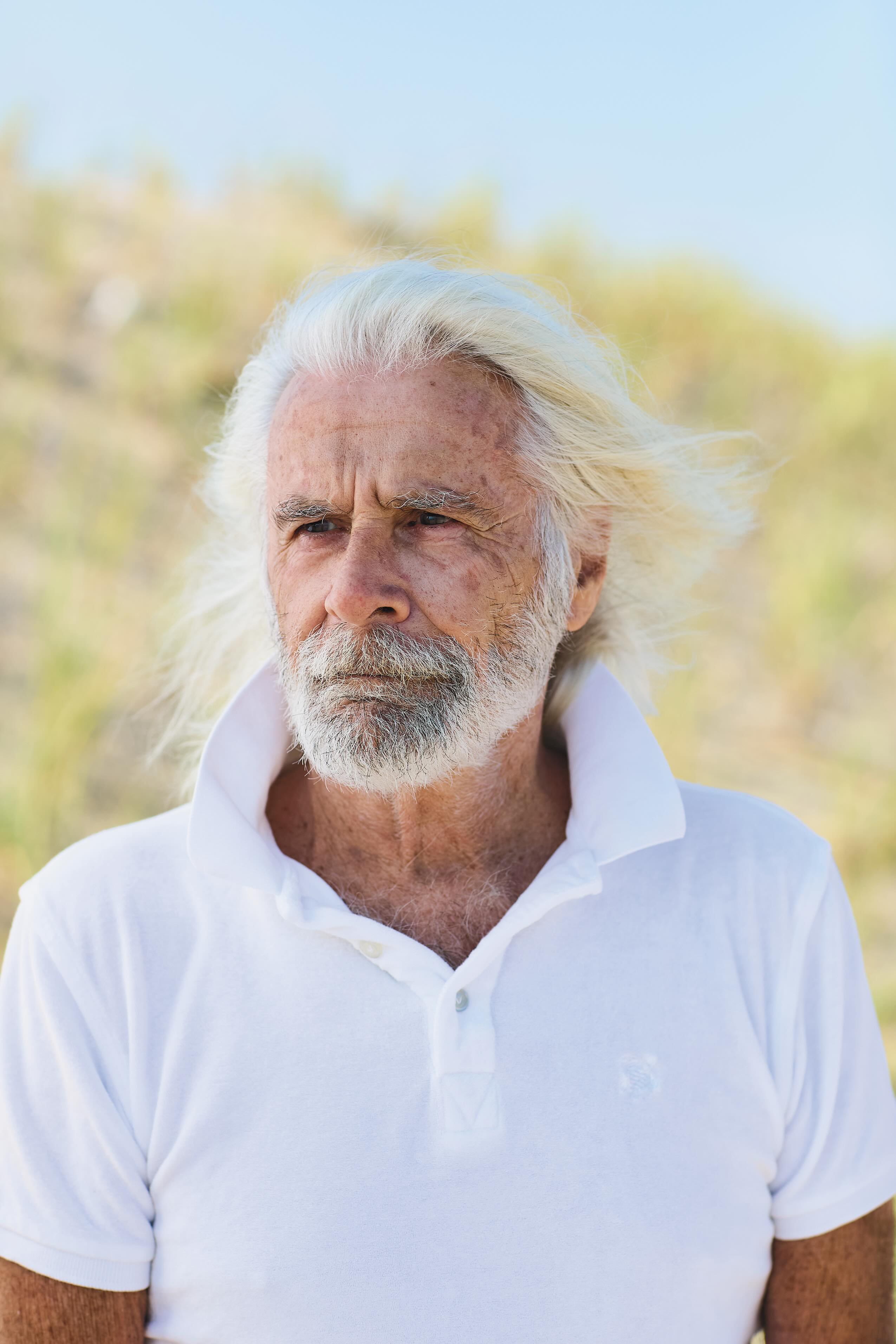
While the ocean feels virtually infinite, and is, by law, open to all, most waves are best left to one rider. And the supply of waves does not change with increasing demand.
Beyond the stereotypically peaceful and good-natured energy of the average surfer, an understanding lies beneath the skin: Surfers can be greedy, territorial creatures ravenous for the next bite before they’ve even finished chewing their last. This hunger is a contagious disease, and one bad apple can spoil everyone’s day.
Non-locals around the world, from Hawaii, Australia and everywhere in between, are judged with extra scrutiny. This has certainly been true in Montauk, especially at the breaks beyond Camp Hero. Even those from the towns to the west — basically, Amagansett and beyond — were judged harshly and held to an elevated standard before any relaxation or acceptance occurred. The core community was, and remains, tight-knit.
The second generation of Montauk surf cowboys, the progeny of the free-spirited community of social degenerates (as Weimar — who is now known as Charlie Weimar Sr. — called himself and his friends) would be among the first surfers born and raised in the area. They would learn to surf, and what that meant, from watching their fathers while standing on the rocks on shore. While the first generation had grown up as part of a burgeoning subculture, this generation would inherit it. As Weimar Sr. puts it: “Raised out here, surfing is part of your life.”
The second generation learned to surf from their industrious, hard-ass, old-school fathers, guys who made sacrifices to base their lives around a place that had no real industry other than commercial fishing and tourism. Bieler says that there were three ways to scrape together a living: construction, fishing, or hospitality. Montauk was still, as Bieler says, “the bastard child of the Hamptons.”
In the meantime, surfing came into its own as a commercially viable sport. By the 1980s there was a humming world of magazines, surf films, and professional competitions. Rick Rasmussen, a near-mystical legend from Westhampton and one of Long Island’s first professional surfers, joined up with Caramanico to help produce a television special with Gerry Lopez, the “King of Pipeline” and best surfer in the world, for ABC’s Wide World of Sports. Surfing became mainstream.
The waves were “their guarded secret,” Bieler says. If an outsider asked a member of the tribe where to surf, the response would be, vaguely, “Up top” — if they gave an answer at all.
And then, first slowly, then all at once, the billionaires began buying out the millionaires. After the Albatross, Bieler opened a restaurant called the Blue Parrot in East Hampton Village in the 1980s. It was a place where a working stiff could sit, down a bottle of scotch, and have a conversation with celebrities like Alec Baldwin. The Blue Parrot is still open today in an alleyway beside the Ralph Lauren boutique, although Bieler is no longer the owner; a celebrity investor group including Bon Jovi is.
Surfing by the 1990s had captured the attention of moneyed city slickers, who came out over their long weekends and needed someone to teach them how. No one can blame newcomers for wanting to participate — no one owns the beach and we are all, unless Shinnecock or Montaukett, newcomers here — but there was frustration, if not occasional animosity, felt among the old-timers. By the time the millennium was approaching, it felt like hordes of wealthy out-of-towners were arriving each weekend with brand-new, state-of-the-art gear but no knowledge of etiquette or respect for the community and its history. “They thought they were surfing people even if they weren’t,” says Nelson. “You only know what you’re exposed to.”
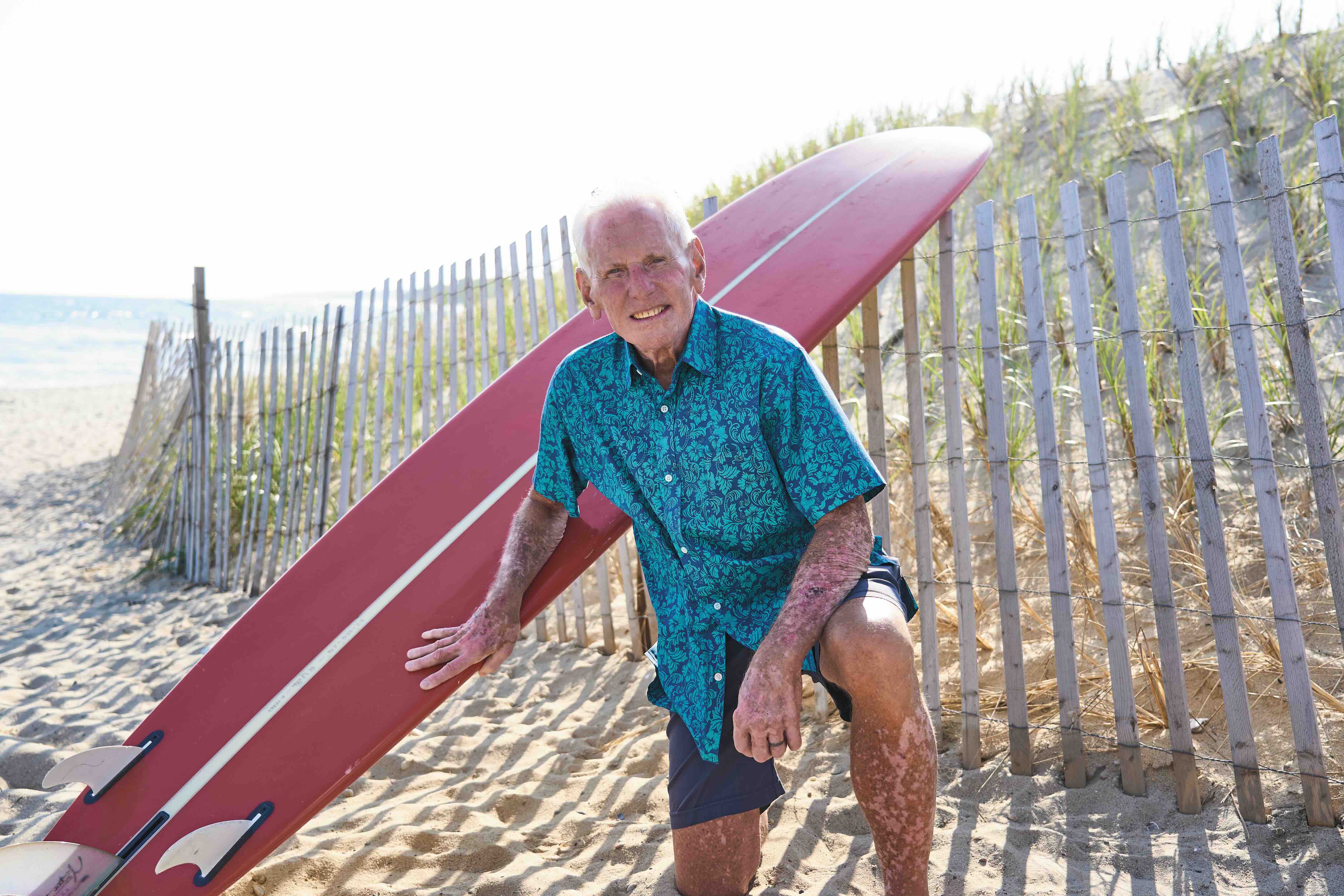
The veterans of the 1970s cowboy days looked on as some local surfers — maybe it was their own offspring — checked license plates to see who was from out of state, or waxed the mirrors of visitors who had committed some breach on the wave. One summer (so the story goes), a squadron of young local rippers claimed the Atlantic Terrace break as their own, accepting the presence of no outsiders and all too happily willing to get physical to maintain their territory. Vincent Carillo, the owner of Liars’ Saloon (born in Brooklyn but moved to Montauk in 1972) stood on the beach baring his teeth and scaring the bejesus out of anyone who dared set foot on the sand.
According to Austin Eckardt, a former professional surfer and owner of Austin’s Surf Club, the 1990s “were punk.”
None of this — the popularity of surfing, the pressures of development, the friction between old-timers and newcomers, the whole “locals only” battle cry — is exclusively a Montauk problem. These are issues in coastal communities around the world, anywhere wealth meets the water.
At the center of the tension locally, though, is Ditch Plain, the most popular surfing beach on the South Fork and so famous at this point that it spawned a restaurant by the same name on the Upper West Side and a line of “Ditch Plains” bedding from Tommy Hilfiger. Jesse Spooner of Southampton, who is among the second-generation offspring to join the crew out past the Lighthouse, calls the wave at Ditch a “reverse Malibu.” There are lots of levels to surfing and there are even varying degrees of being a beginner, and Ditch is a place for all of them. This is a beautiful thing, but it can create a nightmare of a lineup, with boards and bodies flying in all directions and no ordered understanding of how to look after yourself or others in the water.
Surf instructors can only do so much to prepare a rider for sessions on his or her own, but as surfers improve they naturally begin to explore spots farther afield. In Montauk, this means more people heading to the traditionally locally dominated spots past the Point. Eckardt remembers pulling up to his most-beloved wave last summer, a long-held near-secret spot, young son in his arms, only to find 40 people in the water. He turned around, got back in his car, and left. Spooner remembers an aggressive young surfer showing up to another tight-knit surf spot, taking every wave, and performing the cardinal sin of paddling around waiting surfers into priority position. Spooner burned the fellow on his next wave only to have him jump on his back midride. The problem was dealt with swiftly and firmly, and the young man sent on his way, never to return.
While the early days at Ditch were cowboy days, today we have a different kind of Wild West — populated by G-wagons rather than $100 beaters, and $2,000 surfboards that might be put to better use as wall art. Surfing has entered an era of A.I. forecasting, online coaching, and wavepools that do their best to condense a lifetime’s worth of knowledge and devotion down to a price tag. But there is light in this dark, and from this complicated dynamic and these intensely mixed feelings come opportunities for industrious East Enders to build businesses that can support their families and allow them to remain in the community they so deeply love.
Surf schools run by locals like Eckardt and Corey Senese (CoreysWave) are two such success stories. Both focus on teaching respect for the ocean and for surfing culture. Grant Monaghan runs the Ditch Witch food truck as his mother before him did; it has operated from the Ditch Plain parking lot since 1994. The Weimars are now three generations into the family fishing business. And there are plenty of examples of Long Island surf rats capitalizing on the Hamptons construction boom to become modern-day developers.
Protections by the state keep the land out at the end of Montauk wild. The old friends from the early days stay in close touch, living near each other between various Hawaiian islands and Montauk. A bench overlooks the wave at Ditch, serving as the point of congregation and shit-talking. There are several families who can share a surf session among three generations, with some moving into their fourth. Spooner has noted an explosion of young female surfers who bring with them a renewed focus on longboard surfing — and help quash the alpha-male intensity of days gone by. There are even two young locals, Chase Lieder and Chloe Coleman, surfing professionally on the World Surf League Longboard Tour. Bieler says that in order to understand how wild that is, you would need to have been here at the beginning.